


Soda Dungeon 2
4.62.03K Reviews
App Specs
- Version
- 1.2.21
- Updated On
- License
- Free
- Downloads
- 1,000,000+
- Developer
- Armor Games Studios Inc
- Categories
- Adventure
- Platform
- Android
Screenshots
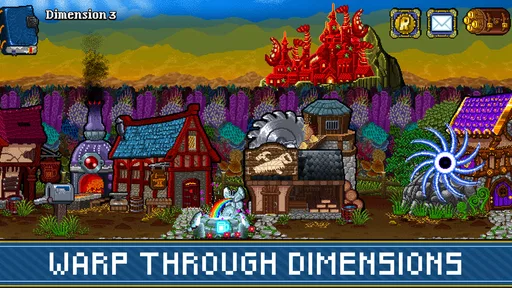
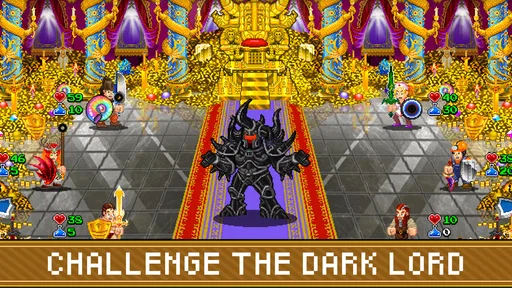
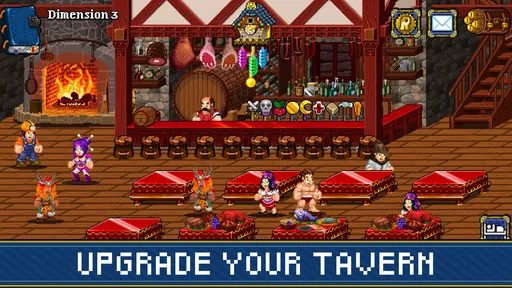
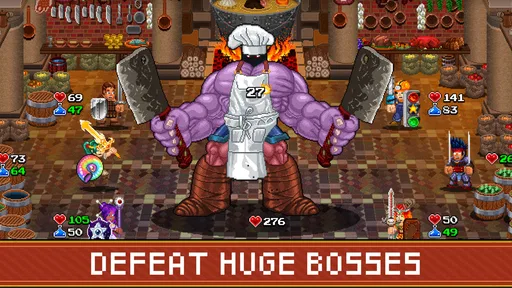
 Analysis by AppCompare
I went into Soda Dungeon 2 expecting a light adventure game I could check between other tasks, and that is exactly where it works best. This is a free dungeon-crawling RPG from Armor Games Studios Inc, built around repeated expeditions, gradual improvement, and a relaxed pace rather than constant reflex challenges. I can start a run, make a few decisions, collect resources, and leave without feeling that I have missed a complicated timing window.
That easygoing rhythm is the main reason I would recommend it to someone who likes adventure games but does not always have time for a long uninterrupted session. It is also the reason I would not recommend it to everybody. If you want a story-heavy adventure with cinematic presentation, direct character control, or a carefully choreographed campaign, this may feel too repetitive. If you enjoy watching a plan become more efficient over several runs, however, its simple surface hides a surprisingly thoughtful routine.
How the dungeon routine actually feels
The basic workflow is straightforward: prepare a party, send it into the dungeon, deal with encounters and rewards, then use what you gained to improve the next attempt. The satisfaction comes less from one dramatic battle than from noticing that a choice made earlier has made the following run smoother. I found myself thinking in small cycles rather than treating every expedition as a separate event.
My preferred approach was to begin with a clear purpose. Sometimes I wanted to push farther, while at other times I was more interested in gathering the materials needed for an upgrade. Those goals can look similar on the screen, but they encourage different decisions. A progress-focused run rewards caution and sustainability; a resource-focused run makes me more willing to accept a shorter trip if the return is useful.
That distinction is one of the first practical lessons in this game. It is tempting to keep sending the same kind of party forward because the early floors feel manageable. Eventually, though, a setup that was excellent for ordinary encounters may be poorly suited to tougher sections. I got better results when I stopped asking whether a team was generally “good” and instead asked what that specific run was supposed to accomplish.
The game’s idle-friendly structure also changes how I use it in daily life. I can play during a short break, make a few preparations, and put the phone away. Later, I return with a clear next step instead of having to remember a complicated quest chain. That makes it a comfortable companion for commuting, waiting rooms, or a quiet evening when I want progress without committing to a full action game session.
There is a trade-off. Repetition is not merely part of the design; it is the design’s central texture. Replaying familiar content can be satisfying when I am testing a better arrangement, but it becomes less interesting when I am only waiting for enough resources to make the next improvement. The game is strongest when I actively adjust my routine rather than treating every expedition as a button-pressing chore.
Worth Reading Before You Choose

EA SPORTS FC Mobile 26 Is a Bigger Football Game, but It Takes Time

Flipboard Shows What News Apps Must Do Beyond the Feed

Switching to Android Auto Means Rethinking Your Driving Routine

Google Calendar Makes a Crowded Week Easier to Manage

Ludo King Makes the Most of the Minutes Between Plans

Baby Panda World Brings Quick Play to Modern Phones, but Its Game Library Feels Busy
Build each run around a question
A useful habit is to give every expedition one question to answer. Can this party survive deeper? Is a particular upgrade worth prioritizing? Which encounter is causing the most trouble? This turns repetition into a small experiment. I can compare the result with the previous attempt and make one deliberate change instead of changing everything at once.
Changing only one major element is especially helpful for new players. If I replace the whole party, alter the equipment plan, and change the spending priority at the same time, it becomes difficult to know what actually helped. A slower, more controlled process makes the game’s progression easier to understand and prevents resources from being scattered across ideas that do not work together.
I also recommend separating “push” sessions from “maintenance” sessions. During a push, I spend attention on reaching new territory or overcoming a difficult point. During maintenance, I focus on collecting, upgrading, and preparing. This simple split reduces frustration because a run that ends early is not automatically a failure; it may have completed its real purpose.
What to check before spending resources
Before using a valuable reward, I look at whether it improves the next several runs or only solves one immediate problem. An upgrade that helps the entire routine is usually more valuable to me than a small improvement that makes one battle slightly easier. This is not about refusing to spend; it is about avoiding the feeling of being permanently short of the resource that matters most.
Another useful check is whether the current obstacle is damage, survival, or consistency. A party that occasionally wins a difficult encounter may still be worse than one that clears easier content reliably. When I focused on consistency first, progress became less dependent on lucky outcomes and my resource collection became easier to plan.
Settings and habits that make the experience smoother
There are no complicated controls to master, which is part of the appeal, but that does not mean the surrounding setup is irrelevant. I pay attention to the game’s available settings and presentation options before settling into longer sessions. Small choices around sound, notifications, and how often I check the game can make the difference between a pleasant background activity and an irritating distraction.
I prefer to keep audio at a level that lets the game remain present without taking over the room. For short sessions, I may leave it on; when I am working or listening to something else, I reduce it. This matters because the game is designed to fit around other activities, not necessarily replace them. A good background game should be easy to pause mentally as well as physically.
I also avoid checking too frequently. Returning every few minutes encourages me to repeat the same action without thinking about the larger plan. A longer interval gives the expedition or progression loop time to produce something meaningful, and it makes each visit feel like a decision point. The exact interval depends on how I am playing, but the principle is consistent: check with a purpose.
Because this is a free game with optional purchases ranging from $0.99 to $49.99 per item, I recommend deciding in advance how I want to handle spending. I treat purchases as optional convenience rather than part of the basic routine. That mindset keeps the progression decisions meaningful and prevents an impatient moment from turning into an unnecessary expense.
For families, the Teen content rating is worth taking seriously. It is not a game I would automatically hand to a very young child simply because the presentation is colorful and casual. Parents should also consider whether the purchase options fit their household rules. For my own use, the important thing is that the game remains enjoyable when I ignore the store and concentrate on the systems already available through play.
Use a repeatable preparation checklist
My short pre-run checklist has three parts. First, I decide whether the goal is exploration, resources, or preparation. Second, I check whether the party suits that goal instead of relying on yesterday’s arrangement. Third, I spend only what supports the next few runs. This takes little time, but it prevents the most common mistake I made early on: entering a dungeon automatically and only afterward realizing I had no clear reason for doing so.
I also keep a mental note of the point where a run stops being efficient. If the party reaches a section where survival becomes unreliable, continuing may consume more time and resources than returning to a safer route. That is not always obvious when the next reward is tempting. Experienced play is often less about forcing a deeper run and more about recognizing when a controlled retreat produces better progress.
Shortcuts are mostly mental, not mechanical
The fastest way to play is not necessarily tapping faster. It is reducing unnecessary reconsideration. I use the same preparation order, the same spending questions, and the same review after each expedition. Once that pattern becomes familiar, I can reserve my attention for the decisions that actually affect the result.
This is where the relaxed structure becomes useful. I do not need to memorize a long sequence of inputs, but I do benefit from remembering why a run succeeded or failed. A note in my head such as “survival became the problem” is more useful than simply deciding that the party was bad. That observation points toward a targeted adjustment.
Another efficient pattern is to avoid upgrading in response to every small setback. Some losses are normal parts of testing a route. If I react to each one with a purchase or a complete rearrangement, I can spend resources without learning anything. I prefer to look for a repeated problem before committing to a major change.
Where the deeper strategy reaches its limits
Although the game rewards planning, it does not become a full tactical RPG simply because the numbers and party choices grow more interesting. Much of the experience still depends on repeating familiar actions and allowing progression to accumulate. Players who need constant novelty may eventually feel that they are managing a routine rather than exploring an adventure.
The presentation also sets expectations. This is not the right alternative to a visually ambitious action RPG, a narrative adventure, or a multiplayer game built around human opponents. Its appeal is closer to a compact progression toy: I arrange a plan, observe the result, and refine it. Comparing it with those larger genres is unfair, but it is still important to know what kind of satisfaction it offers.
It is also less suitable for someone who dislikes indirect control. The game’s charm comes from preparation and progression, not from personally guiding every movement through a dungeon. If I want immediate reactions, precise dodging, or the feeling that my own hand-eye coordination determines every encounter, I would choose a conventional action adventure instead.
On the other hand, players who enjoy traditional role-playing games may appreciate how little friction there is between sessions. I do not have to relearn a complex control scheme every time I return. The drawback is that the low-friction design can make the middle of a long play period feel flat. I get the best experience by treating it as a series of compact visits rather than an all-day marathon.
The current version is 1.2.21, and the game supports devices running Android 6.0 or later. That makes it approachable for people using older compatible phones, though the practical experience will still depend on the device and how many other apps are active. I would keep expectations sensible: compatibility is useful, but it does not turn every older phone into an ideal gaming device.
Its popularity is substantial, with over a million installs, a 4.6 average from around thirty-four thousand ratings, and roughly two thousand written reviews. Those figures suggest that the loop has found a broad audience, but they should not be mistaken for proof that every player will enjoy the repetition. I see them as reassurance that the basic formula is well established, not as a substitute for matching the game to my own taste.
Who should skip it
I would skip this one if I need a strong emotional story to keep me playing, if I dislike resource management, or if repeated dungeon runs feel like work. I would also look elsewhere if I want a game that can be completed through a short, fixed campaign with little reason to revisit earlier content. The very habits that make this game relaxing can feel monotonous to someone who wants constant surprises.
I would be cautious too if I am prone to impulse purchases in progression games. The free entry is convenient, but optional item prices can reach $49.99, and the desire to speed up a slow moment can be persuasive. Setting a personal rule before playing is more effective than trying to make that decision while frustrated by a difficult run.
Who will get the most from it
I think it is a particularly good fit for players who enjoy incremental improvement, light RPG planning, and games that respect interruptions. It works for the person who wants something to check during a coffee break, the player who likes building a routine around upgrades, and the fan of dungeon crawlers who does not need every battle to be manually controlled.
It is also a good choice for someone returning to mobile gaming after a long break. The controls and overall rhythm are approachable, yet there is enough room to develop better habits than simply repeating the same run. I found that the game became more interesting once I started treating preparation as the main activity rather than something to rush through before the dungeon.
Armor Games Studios Inc has positioned this sequel-like experience around accessibility and persistence rather than spectacle. The result is easy to pick up, but the best results come from paying attention to patterns. That combination explains why a short store summary cannot really communicate the game’s main strength: it gives ordinary repetition a reason to continue.
My final verdict after settling into the routine
After spending time with it, I see Soda Dungeon 2 as a comfortable adventure game for people who like progress they can shape gradually. Its strongest feature is not a single flashy mechanic. It is the way a simple loop encourages me to form habits: define the purpose of a run, prepare accordingly, notice the real obstacle, and invest in a change that should help more than once.
I would recommend starting slowly rather than chasing maximum depth immediately. Learn what makes a run consistent, keep spending focused, and use short sessions to test one idea at a time. That approach reveals the strategy underneath the relaxed presentation and avoids turning the game into an automatic sequence of repeated taps.
The limitations are clear. The pace can become repetitive, the indirect combat will not satisfy action-game fans, and optional purchases require sensible boundaries. Still, those weaknesses are closely tied to the game’s identity rather than unexpected flaws. It is deliberately a low-pressure dungeon crawler, and it succeeds when I want a game that can sit beside my day instead of demanding all of it.
For me, the deciding question is simple: do I enjoy improving a process? If the answer is yes, this free adventure is easy to recommend, especially for Android players who want a flexible RPG routine. If the answer is no, the familiar runs may feel empty no matter how far the progression goes. The best way to enjoy it is to play with a plan, not merely to keep the dungeon running.
Pros
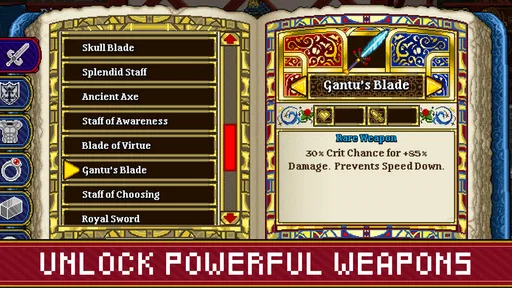
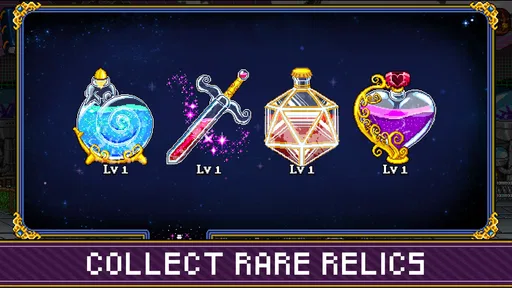
- Deep crafting and equipment systems reward long-term progression.
- Offline-friendly gameplay lets you continue dungeon runs without constant internet.
- Flexible party building supports different combat strategies and playstyles.
- Frequent discoveries
- quests
- and unlocks keep later runs engaging.
- Distinctive pixel-art presentation gives the game a charming retro identity.
Cons
- Repetitive dungeon runs may feel monotonous after extended play sessions.
- Progress can become heavily dependent on grinding for resources and upgrades.
- Some systems and menus take time to understand for new players.
- Combat automation limits direct control during individual battles.
- Later progression may feel slow without investing significant playtime.
FAQs for Soda Dungeon 2
What is Soda Dungeon 2, and what kind of game is it?
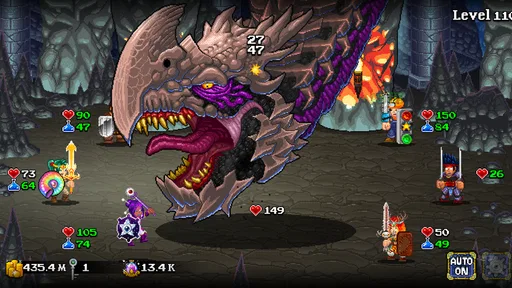
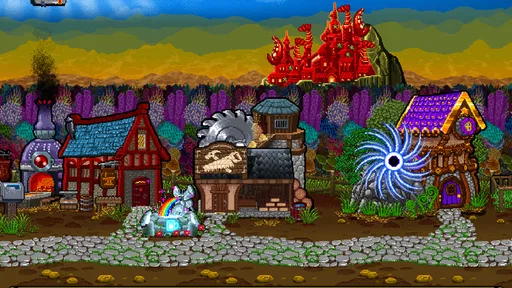
Soda Dungeon 2 is a free-to-play role-playing game focused on recruiting teams of soda-powered adventurers, exploring dangerous dungeons, and collecting better equipment. It combines idle progression with turn-based combat, so your characters can continue earning rewards even when you are not actively playing. The game also includes crafting, town upgrades, quests, and plenty of humorous dialogue and pixel-art presentation.
Can I play Soda Dungeon 2 offline?
Soda Dungeon 2 is designed to support offline progression, which is one of its most convenient features. You can send your party into dungeons, close the game, and return later to collect progress and rewards. However, certain features may require an internet connection, including advertisements, cloud-related services, updates, or other online functions. Availability can also vary depending on your device and game version.
Is Soda Dungeon 2 free to download and play?
Yes, Soda Dungeon 2 can be downloaded and played for free on supported Android and iOS devices. The game may include optional in-app purchases and advertisements, but spending money is not required to experience its main progression systems. Players can generally advance by managing their team, improving equipment, and using the game’s idle mechanics, although optional purchases may provide convenience or speed up certain activities.
Does Soda Dungeon 2 require constant manual control during battles?
No, the game does not require you to control every action manually. Battles use turn-based systems and can be automated, allowing your team to fight through dungeon floors with limited supervision. You can still adjust party members, abilities, equipment, and strategy when necessary. This makes the game suitable for both active players who enjoy optimization and casual players who prefer a more relaxed idle RPG experience.
What should new players know before starting Soda Dungeon 2?
New players should expect a gradual progression system rather than a fast, story-only adventure. Building an effective team, choosing useful classes, upgrading the town, and managing resources are all important parts of the experience. It is worth experimenting with different party combinations because some abilities work better against particular enemies. Also, patience is helpful: repeated dungeon runs and offline rewards are central to becoming stronger.


